



ECNU Party Secretary Mei Bing Leads Delegation to Xinjiang
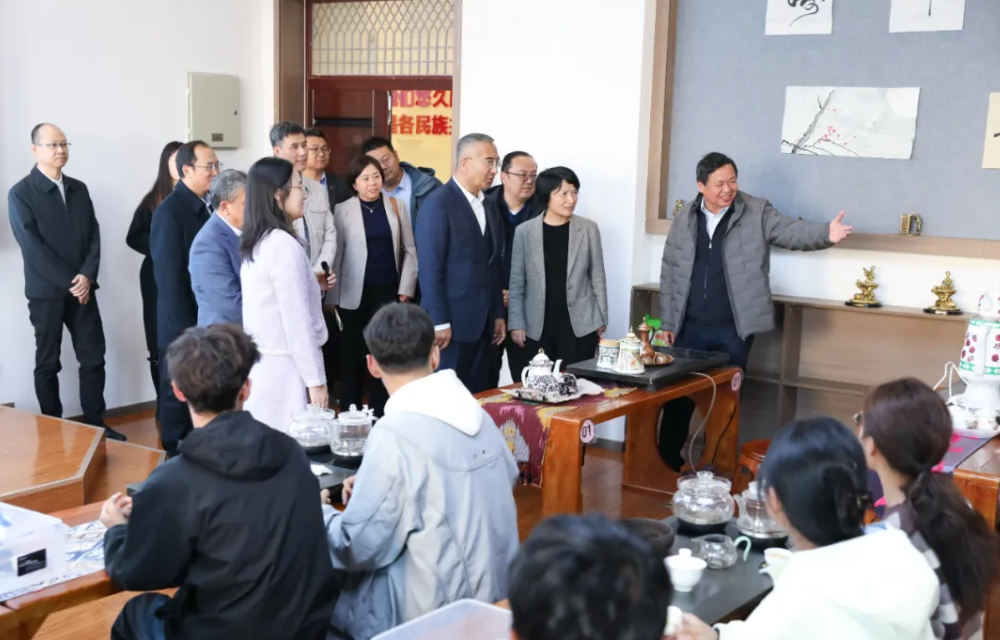
ECNU Party Secretary Mei Bing and delegation at Xinjiang Normal University
To study and implement the spirit of the Fourth Plenary Session of the 20th Central Committee of the Communist Party of China, to carry through the important speech delivered by General Secretary Xi Jinping during the celebrations marking the 70th anniversary of the founding of the Xinjiang Uygur Autonomous Region, and to actively serve the national Belt and Road Initiative and the high-quality economic and social development of Xinjiang, Mei Bing, Party Secretary of East China Normal University, led a delegation to Urumqi, Yili and Kashgar from 29 to 31 October. The visit was intended to set the direction for the university’s work during the 15th Five-Year Plan period, make its support for Xinjiang more effective, and gather views and ideas on advancing university–locality and university–university cooperation toward higher-quality development.
Also taking part were Meng Zhongjie, Deputy Secretary of the University Party Committee; Zhang Huihong, Standing Committee Member of the University Party Committee, Head of the United Front Work Department and Director of the University Office; and heads of relevant departments and schools.
East-West Partnership: A New Chapter in University Development
The delegation’s first stop was Xinjiang Normal University, where members visited the practice base for education on forging a strong sense of community for the Chinese nation and the Huang Wenbi Research Center, and held in-depth discussions on establishing a long-term cooperation mechanism, advancing area and country studies, educational innovation and faculty development. Those taking part included Kaysar Abdulkirim, Vice Chairman of the People’s Government of the Xinjiang Uygur Autonomous Region and Deputy Secretary of the Region’s Education Work Committee; Mamtimin Musa, Deputy Secretary of the Region’s Education Work Committee and Deputy Party Secretary and Director of the Regional Education Department; Jiang Haijun, Party Secretary of Xinjiang Normal University; Ainiwaer Aikemu, Deputy Party Secretary and President; Liu Jun, Deputy Party Secretary; and Guan Ming, Standing Committee Member and Vice President.
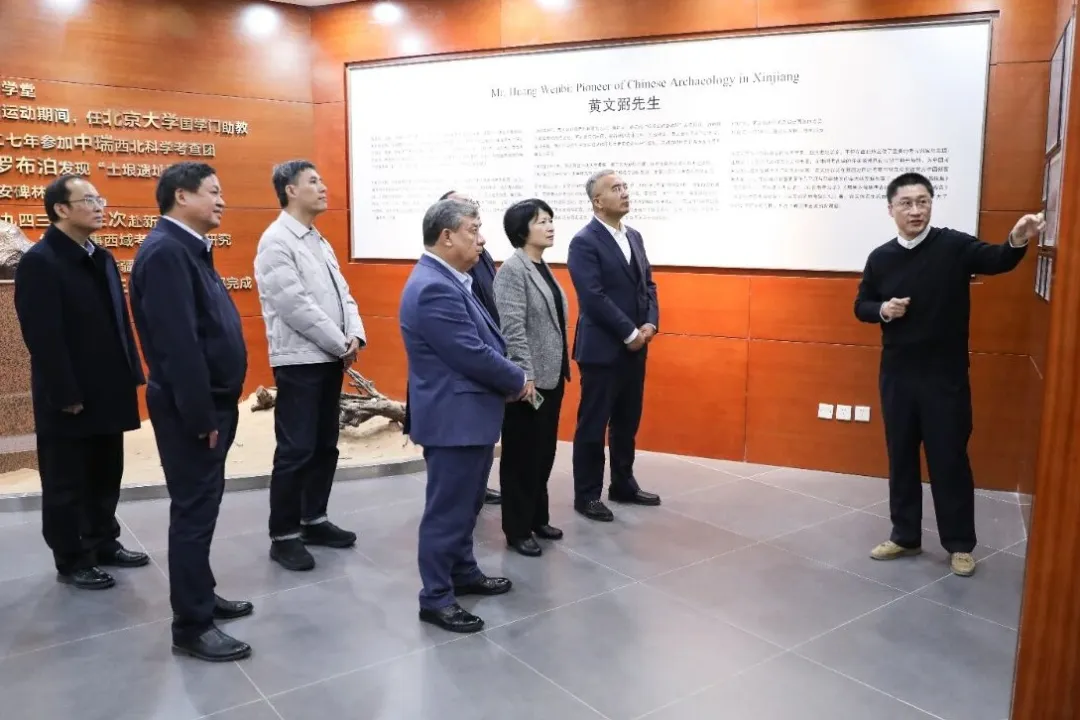
ECNU delegation visits the Huang Wenbi Research Center at Xinjiang Normal University
Walking through the tea ceremony room, calligraphy room and smart lecture hall, the delegation gained a strong sense of how the practice base has rooted itself in the border region and pursued innovative, theory-driven work. At the Huang Wenbi Research Center, the delegation learned about Huang Wenbi’s scholarly legacy and about Xinjiang Normal University’s substantial achievements in heritage conservation, academic research and thematic exhibitions.
Jiang Haijun expressed sincere thanks for ECNU’s long-standing support. As a Ministry of Education partner university supporting Xinjiang, ECNU has since cooperation began in 2002 seconded 7 officials, provided targeted training for 85 doctoral and master’s students, and hosted 475 Xinjiang Normal University students on exchange, achieving substantive results in discipline development, talent cultivation, faculty improvement and administrative optimization. He noted that Xinjiang Normal University is at a critical stage in building a high-level normal university for the new era, and looked forward to deepening cooperation with ECNU.
Mei Bing noted that the practice base for education on forging a strong sense of community for the Chinese nation provides an important platform for promoting exchanges among ethnic groups, and looked forward to the two universities jointly exploring new approaches to publicity and education driven by new technologies such as artificial intelligence. ECNU is willing to strengthen cooperation with Xinjiang Normal University in think-tank development, industry–academia–research integration and faculty training, and — drawing on Xinjiang’s geographic advantages — to jointly advance the commercialization of research results in area and country studies, biomedicine and energy and chemicals, contributing university strength to border-region education and to forging a strong sense of community for the Chinese nation.
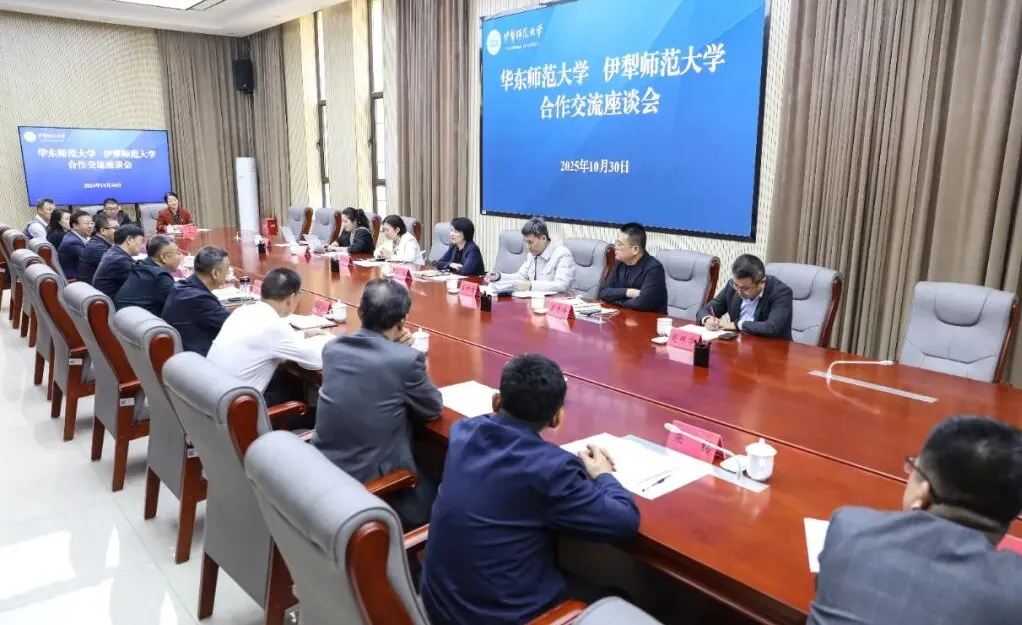
ECNU delegation in discussion with Yili Normal University representatives
At Yili Normal University, the delegation took part in a discussion with Liu Bin, Party Secretary; Jurait Sabir, Standing Committee Member and Vice President; Zhang Wei, Standing Committee Member and Vice President; and heads of relevant departments. They also met ECNU staff on secondment, senior volunteer teachers and student volunteer teachers.
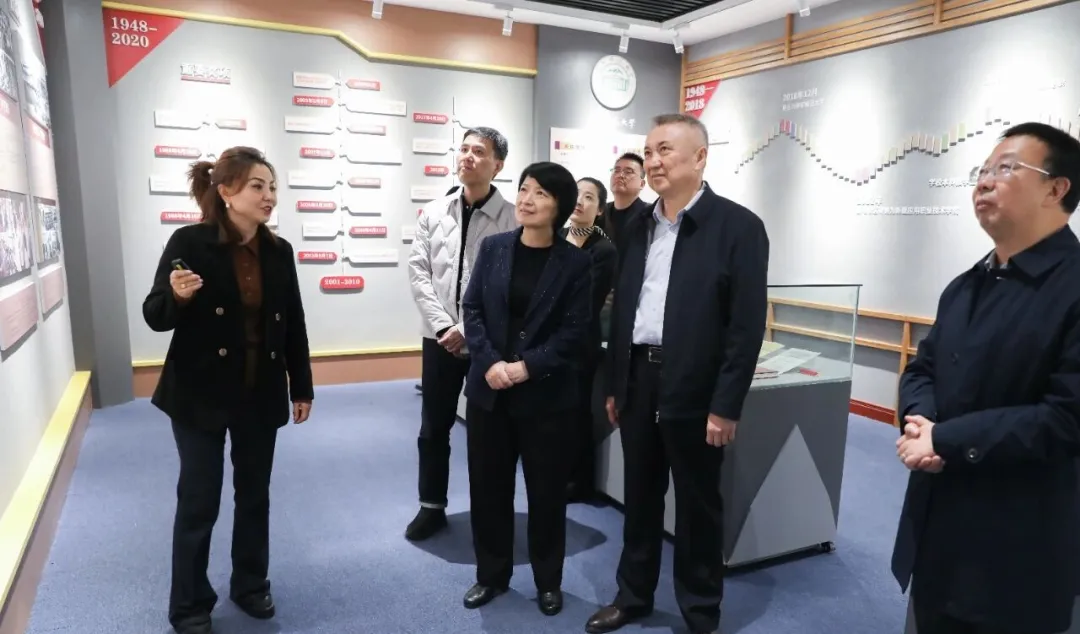
ECNU delegation at Yili Normal University
Liu Bin said ECNU has demonstrated a strong sense of responsibility in supporting western universities and serving the national strategy, and that its assistance to Yili Normal University has been genuine and effective, providing intellectual and material support for building a high-level normal university in the border region. In 2023 ECNU also seconded an outstanding official, Wang Qinghua, Standing Committee Member of the University Party Committee and Head of the Publicity Department, to serve as a Standing Committee Member and Assistant to the President at Yili Normal University, advising on the new campus, discipline development and publicity work, and becoming a bridge of friendship and coordination between the two universities.
Mei Bing stressed that partnership between universities in eastern and western China is a necessary requirement of the national strategy and an intrinsic need of educational equity. ECNU will continue to deepen cooperation with universities in Xinjiang, promote resource sharing and complementary strengths, and achieve a higher level of coordinated development in talent cultivation, scientific research and social service, contributing more wisdom and strength to building a modern socialist Xinjiang.
Mutual Commitment: New Space for University–Locality Cooperation
At the Education Bureau of the Xinjiang Production and Construction Corps, the delegation held discussions with Zhang Yong’an, Party Secretary and Director of the Bureau; Jiang Hongchao, Party Committee Member and Deputy Director; and heads of the higher education and teacher affairs divisions.
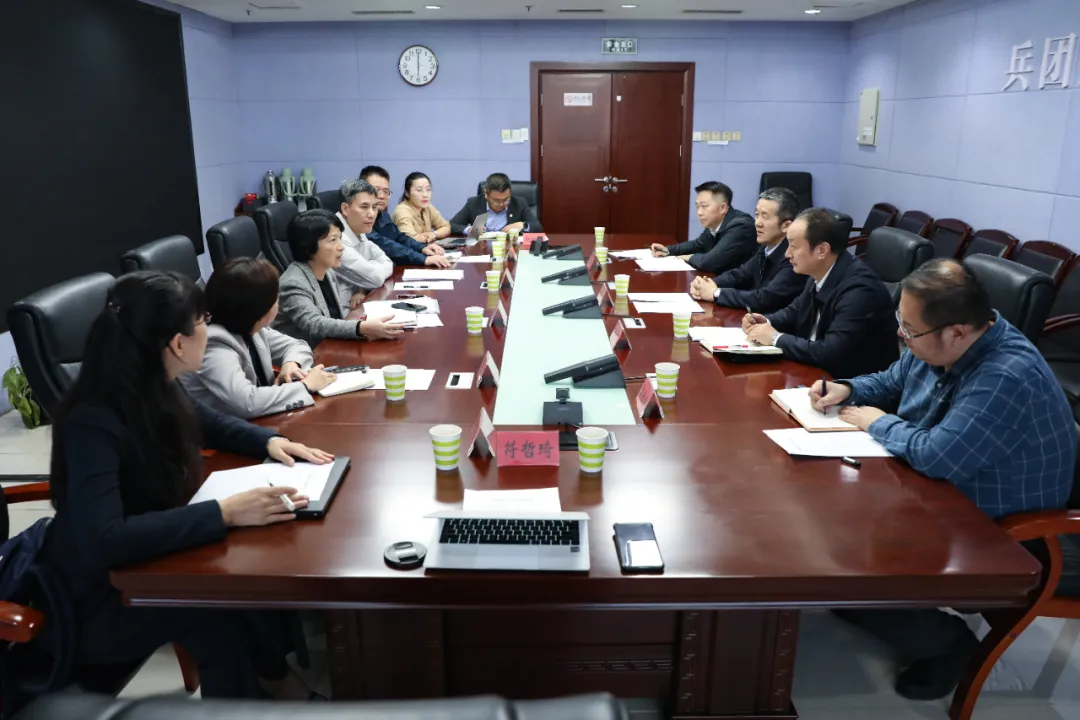
ECNU delegation in discussion with the Education Bureau of the Xinjiang Production and Construction Corps
At the discussion, ECNU’s School of Chemistry and Molecular Engineering reported on two industry–education integration projects. The team of Professor Zhou Jian, working with Shihezi University, focuses on organosilicon chemistry and has built an integrated industry–academia–research platform that has been approved as a regional and Corps key laboratory; going forward it will deepen research into downstream materials in support of Xinjiang’s silicon-based industrial chain and national high-technology progress. Professor Yu Jinsheng, together with Shihezi University and the Agricultural Science Institute of the Corps’ Tenth Division, is running a demonstration project on mosquito and blackfly control, providing technical practice for ecological security in Altay and across Xinjiang.
Zhang Yong’an described the development of education in the Corps, highlighting the structural changes in higher education over the past two years. In line with the strategy of expanding and improving higher education in southern Xinjiang, the Corps has established 3 new undergraduate universities and 5 vocational colleges in two years, doubling its scale. During the 15th Five-Year Plan period, he hoped ECNU would bring its educational strengths to bear in supporting discipline and faculty development, helping Corps universities shift from expansion to quality improvement, advancing the integration of education, science and technology with talent, and serving high-quality economic and social development.
Mei Bing said the visit had given a strong sense of the educational achievements of the new-era strategy for governing Xinjiang. ECNU will draw on its strengths in smart education, think tanks and talent to support the Corps in building its teaching workforce, researching education policy and applying AI to education, systematically addressing talent shortages and raising Corps education to a new level. On commercializing research results, the two sides will leverage the Corps’ institutional strengths to pursue joint innovation and inject solid momentum into regional development.
Shanghai and Kashgar in Concert: A New Chapter in Xinjiang Support
At the Shanghai Front Command Headquarters for Xinjiang Support, the delegation held discussions with Commander-in-Chief Meng Qingyuan; Gu Changyou, Party Committee Member and Deputy Head of the Khunjerab Port Entry-Exit Border Inspection Station; Huang Peng, Director of the Eighth Research Department of the Aerospace Information Research Institute, CAS; Wei Hongwei, project leader; and Wang Jianping, Head of the Kashgar Satellite Station. They heard presentations on projects including “Ecological Sand Control and Industrial Application of Hybrid Kenaf” from ECNU’s School of Geographic Sciences and “Smart Border Defence at Khunjerab Port” from the School of Communication and Electronic Engineering, took part in a Party-building ceremony, and unveiled a plaque for a Student Practice Base.
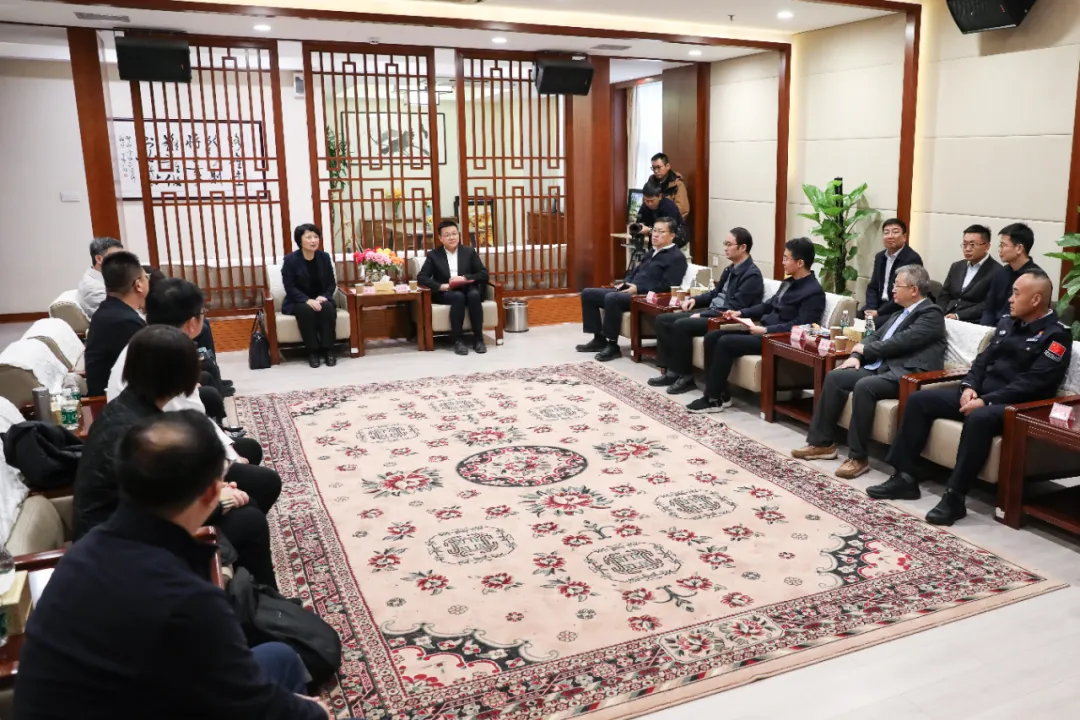
ECNU delegation at the Shanghai Front Command Headquarters for Xinjiang Support
Since 2018, ECNU and the Kashgar region have jointly run an online demonstration training programme to improve proficiency in the national common language, creating an innovative ECNU model built on modular, round-the-clock and personalized learning that was rolled out nationwide in 2020. During the 15th Five-Year Plan period, the university and the locality will deepen collaboration and refine the training, making Kashgar a benchmark for such programmes in ethnic regions.
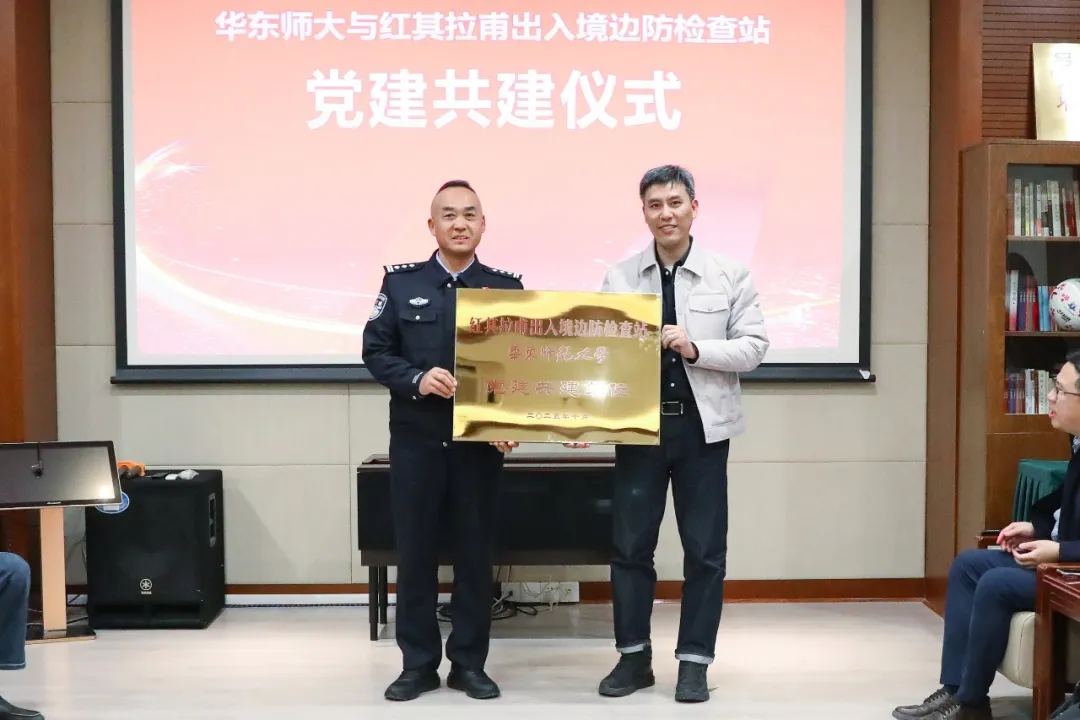
Party-building ceremony with Khunjerab Port Entry-Exit Border Inspection Station
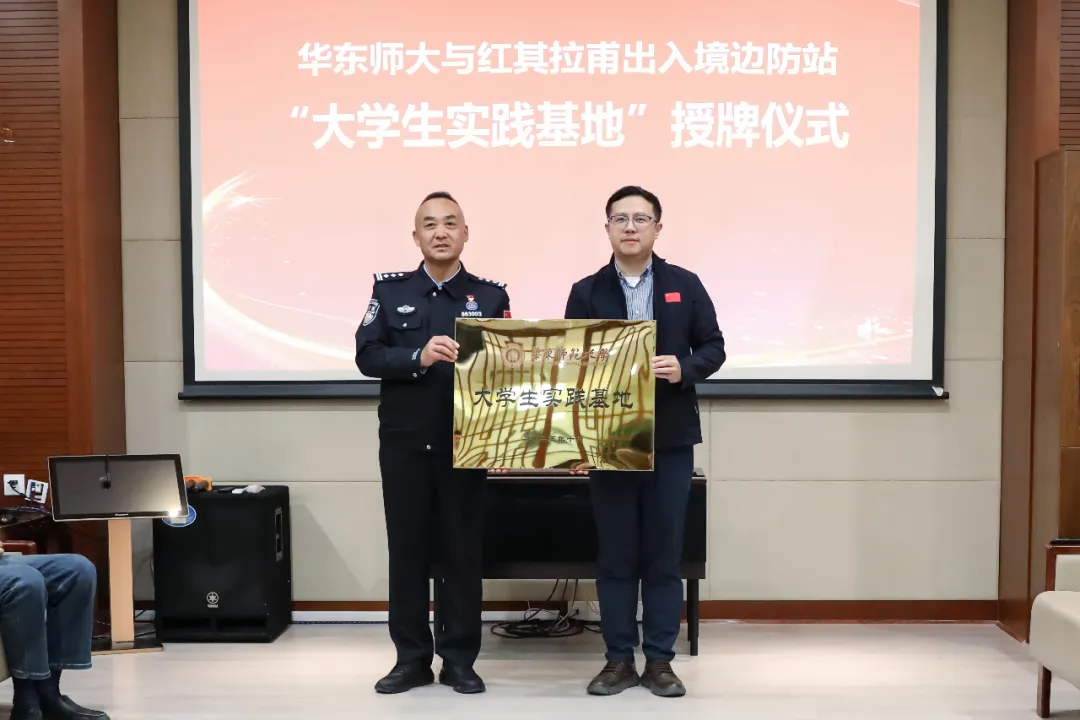
Plaque-awarding ceremony for the Student Practice Base with Khunjerab Port Entry-Exit Border Inspection Station
This year marks the fifteenth anniversary of Shanghai’s educational support for Xinjiang. Meng Qingyuan thanked ECNU for its long-term support, describing its work as “deep, cutting-edge and effective.” He hoped both sides would jointly plan for the 15th Five-Year Plan period and expand cooperation in raising the quality of basic education, promoting the national common language, technology empowerment, think-tank research and teacher training, contributing Shanghai’s wisdom and strength to building a modern socialist Xinjiang.
Mei Bing said that Shanghai and Kashgar working in concert is a vivid illustration of ECNU’s support for Xinjiang. Going forward, the university and the locality will be guided by joint Party-building, deepen cooperation in talent cultivation, scientific and technological innovation and social service, and foster an all-round, multi-level and broad-based pattern of coordinated development.
Frontier Focus: Serving the Nation’s Grand Strategy
During the visit to Kashgar, the delegation, on behalf of ECNU, donated an ECNU-2310 high-precision active hydrogen maser to the Kashgar Station of the Aerospace Information Research Institute, Chinese Academy of Sciences.
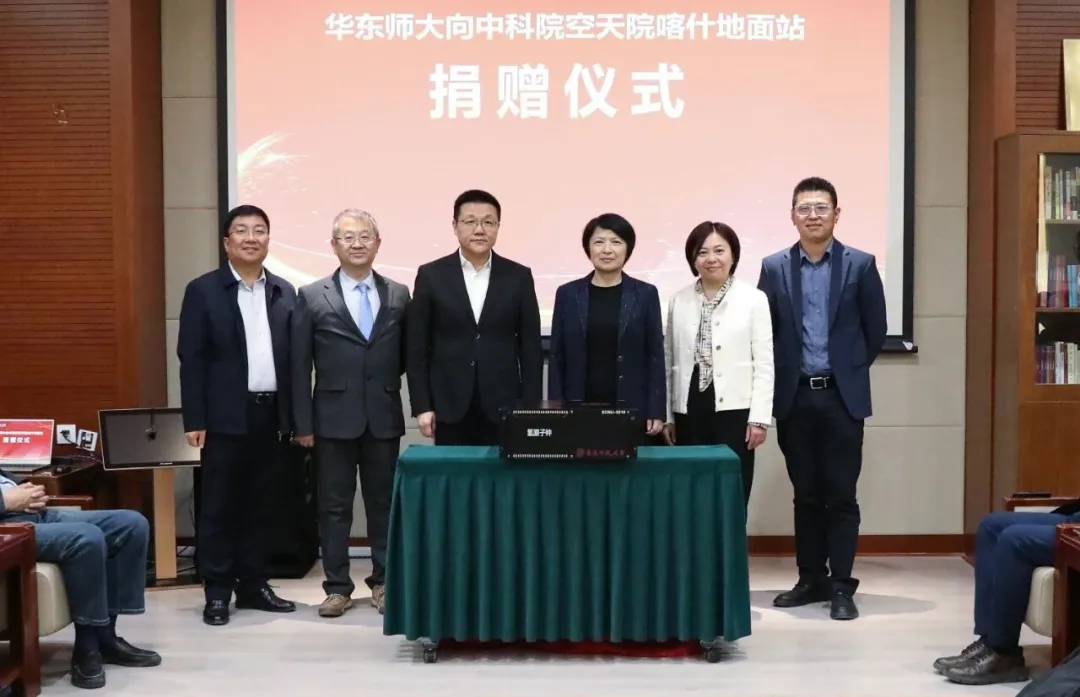
Handover ceremony of a hydrogen maser from ECNU to the Kashgar Station of the Aerospace Information Research Institute, CAS
The maser was independently developed by the team of Associate Researcher Liu Shanmin at ECNU’s School of Communication and Electronic Engineering. It is the world’s smallest active hydrogen maser, offers outstanding stability, and is manufactured with fully self-owned intellectual property, achieving 100% domestic content.
The Kashgar Station of the Aerospace Information Research Institute, CAS, handles national land observation, space science satellite data reception and tracking and control for dozens of satellites, and is known as the “western gateway” of China’s space tracking and control network. The maser will improve the station’s time reference accuracy more than tenfold, strengthen tracking and control for deep-space probes such as Chang’e-4 and Tianwen-2, support optimization of the BeiDou system, and provide sub-nanosecond time synchronization for transport, power and communications along the Belt and Road, supporting the growth of the digital economy.
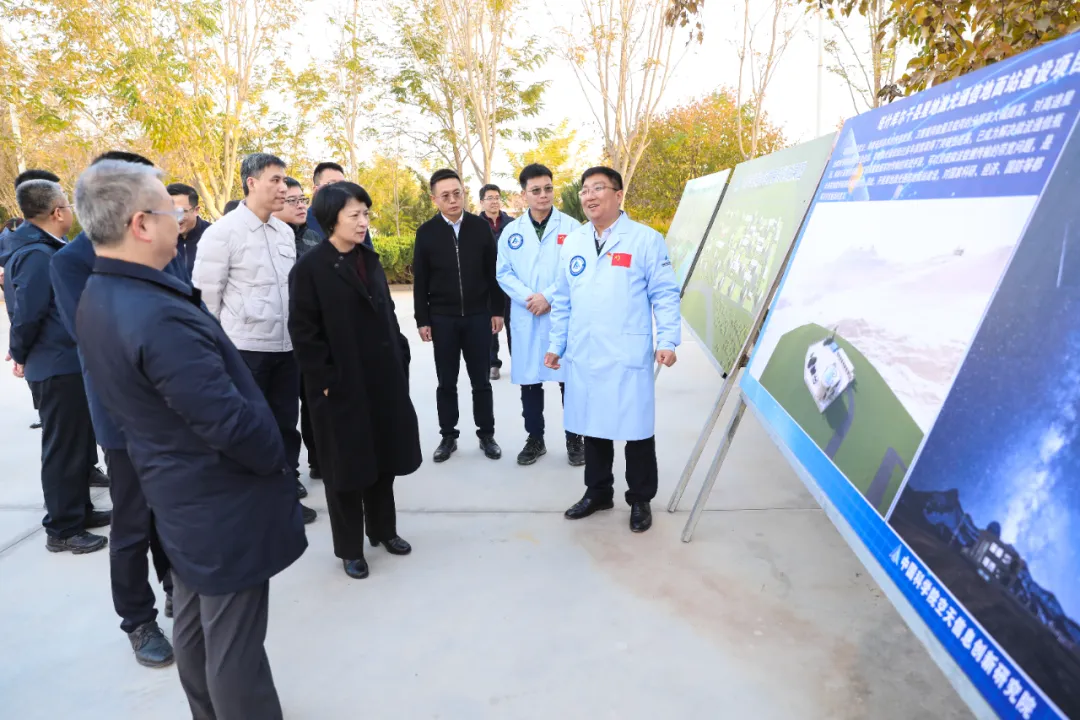
ECNU delegation visits the Kashgar Station of the Aerospace Information Research Institute, CAS
Mei Bing said ECNU would bring together its strengths in optics, physics, geography, statistics and software to deepen strategic cooperation with the Kashgar Station, contributing university expertise to China’s space ambitions and to Xinjiang’s modern industrial system.
The delegation also toured the station grounds, the satellite data reception facility and the laser communication antenna, reaching consensus on remote-sensing data applications and on aerospace information technology serving regional development.