
SPARKSTIME
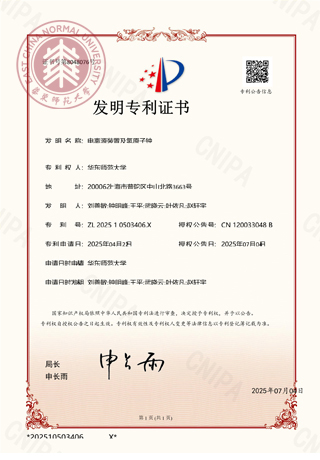
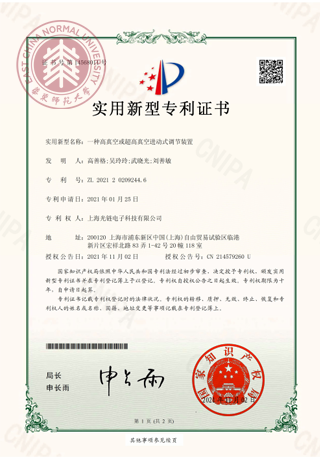
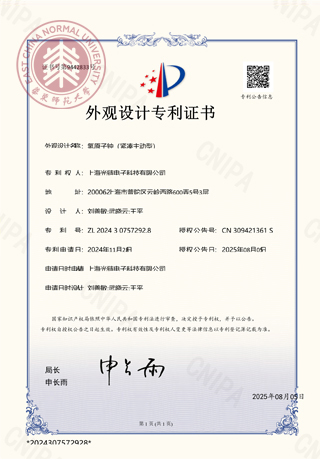
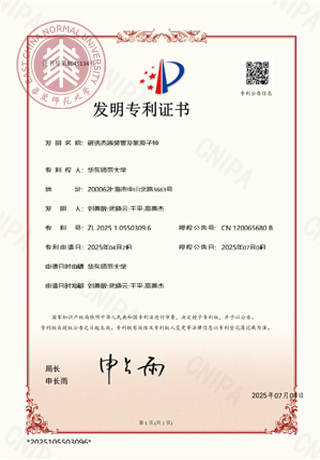
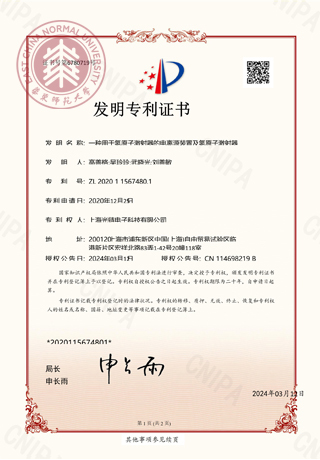
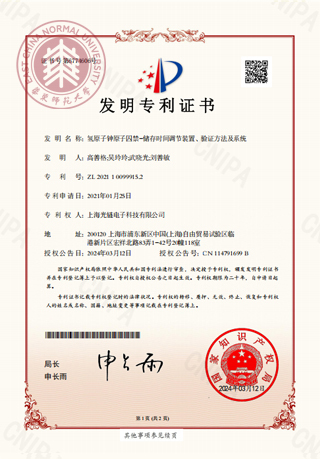
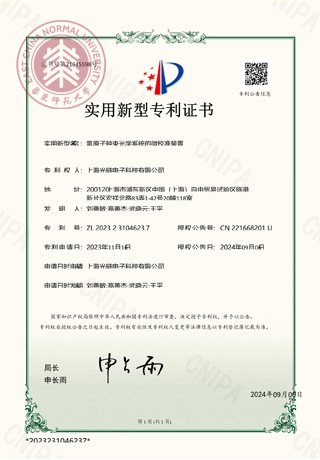
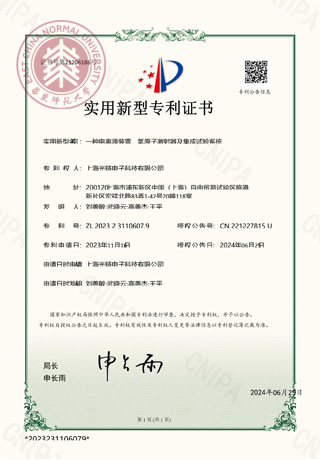
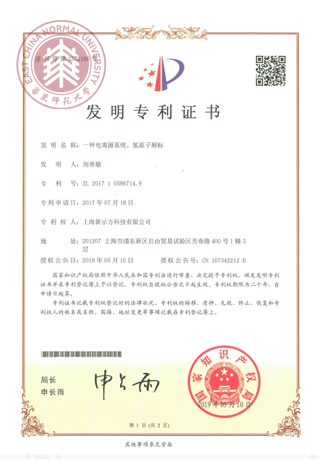
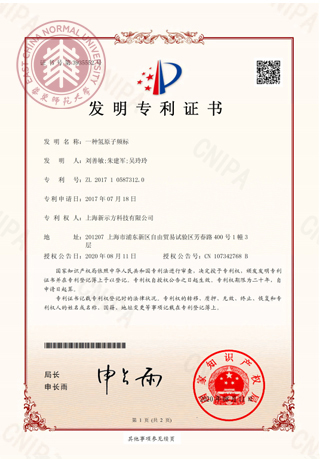
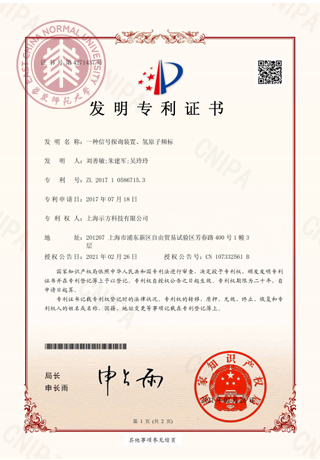
SPARKSTIME was founded in October 2024. The company focuses on quantum precision measurement and is dedicated to the development, manufacture and integrated engineering deployment of active hydrogen masers for time and frequency reference. It is currently the only private enterprise in China that holds independent core intellectual property for hydrogen masers and commands the complete process technology; its masers meet the requirement for 100% domestic content in core equipment. The project team has filed 17 patents, with 7 invention patents, 3 utility model patents and 1 design patent granted.
The hydrogen maser is a product of the close union between quantum physics and electronic information science, and one of the time and frequency standards (reference scales) that describe the motion of matter and changes of state. As a high-precision time and frequency standard, hydrogen masers are widely used in satellite navigation, communication networks, astronomical observation and scientific research. As global competition intensifies and digital and intelligent technologies create urgent demand for precise time synchronization, the hydrogen maser has become an essential guarantee and core foundation for high-precision time keeping and dissemination systems. In satellite navigation systems in particular — GPS, BeiDou and Galileo — the atomic clock is the “heart” of the navigation satellite, and its performance, stability and reliability directly determine positioning accuracy and the dependable operation of the system. Yet with the rapid development of spaceflight, communications and cross-platform data-link integration, conventional hydrogen masers — bulky and heavy — can no longer meet the needs of low-Earth-orbit satellites, deep-space probes and cooperative swarm platforms.
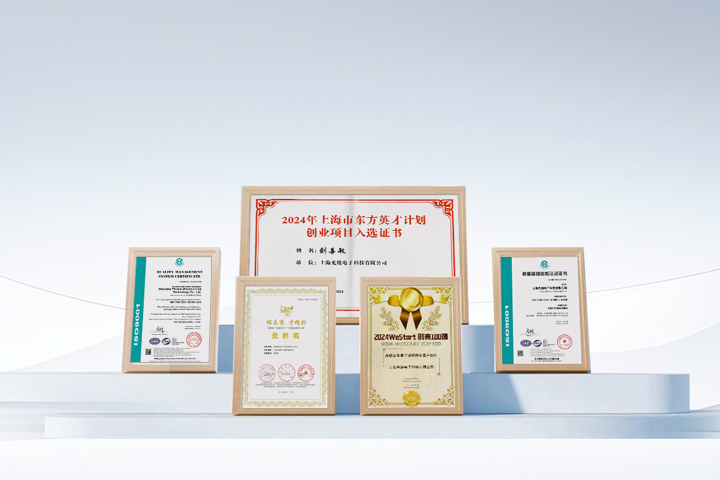
The project leader, Liu Shanmin, is an Associate Professor and doctoral supervisor at the School of Communication and Electronic Engineering (School of Integrated Circuit Science and Engineering) at East China Normal University, with more than 15 years of experience in hydrogen maser engineering development. In 2024 he won an Excellence Award at the finals of the Haiju Talent Global Innovation and Entrepreneurship Competition and was selected for support under the 2024 Shanghai Oriental Talent entrepreneurship programme. In 2025 he won a Silver Award in the spatial information category of the Shanghai Integrated Development Innovation Competition. Chief Scientist and co-founder Zhang Weiqun is a former Director and Research Fellow/doctoral supervisor of the Time and Frequency Research Laboratory at the Shanghai Astronomical Observatory, Chinese Academy of Sciences, with more than 40 years of experience in hydrogen maser product development. He has led the development of over 100 hydrogen masers, most of them deployed at domestic military tracking and control stations, with one unit each exported to Australia and the United States. The core team comes from research institutes of the Chinese Academy of Sciences, Project 985 universities and listed defence companies, and all members took part in the BeiDou-3 global networking satellite programme, a major national science and technology project.
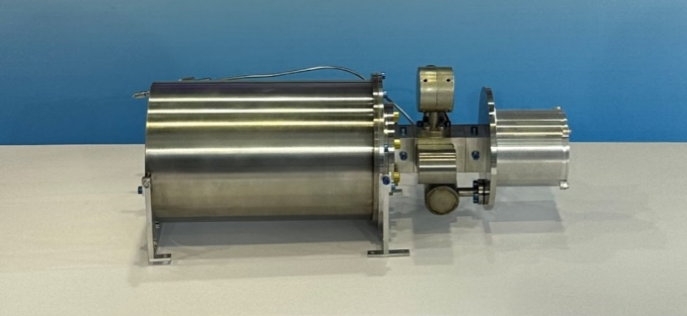
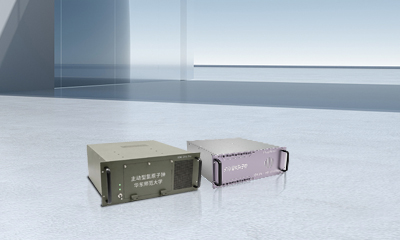
In 2023 the team developed and launched a new generation of 10 kg ultra-compact active hydrogen maser — currently the only one of its kind in China and the smallest active hydrogen maser in the world. The 10 kg ultra-compact active hydrogen maser offers excellent frequency stability and uses the most advanced process integration technology under fully self-owned intellectual property, meeting 100% domestic content requirements. It is suited to spaceborne applications (next-generation navigation satellites, LEO internet satellites and others), to autonomous cooperative navigation, positioning and timing systems on medium and large equipment platforms of all types, and to ground-based time keeping, metrology, scientific research and engineering.
The team has established strategic partnerships with user organizations including the First, Fifth and Eighth Academies of China Aerospace Science and Technology Corporation, the Second and Third Academies of China Aerospace Science and Industry Corporation, and China State Shipbuilding Corporation.
In 2023 the team developed and launched a new generation of 10 kg ultra-compact active hydrogen maser — currently the only one of its kind in China and the smallest active hydrogen maser in the world. The 10 kg ultra-compact active hydrogen maser offers excellent frequency stability and uses the most advanced process integration technology under fully self-owned intellectual property, meeting 100% domestic content requirements. It is suited to spaceborne applications (next-generation navigation satellites, LEO internet satellites and others), to autonomous cooperative navigation, positioning and timing systems on medium and large equipment platforms of all types, and to ground-based time keeping, metrology, scientific research and engineering.